Buying guides
Custom kids’ underwear quotation: which files and quantities should you send?
Suppose you want the Duck & Frog cut with your own artwork. Send the product link to explain the shape, then attach the artwork and a quantity sheet. Put the total in individual garments: 100 pieces is LULUNIO’s starting minimum for customization. What needs an answer before you can order? Put those questions in the same enquiry.
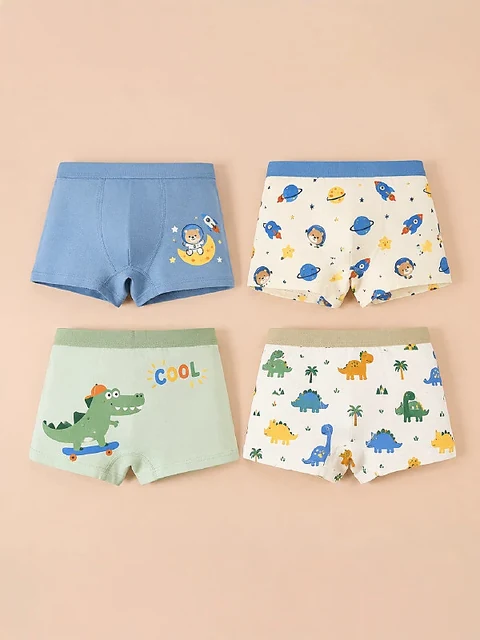
Existing space and dinosaur set shown as a style reference for an enquiry, not as a completed custom-order example.
Say what the picture is there to explain
Example brief: “Girls’ boxer briefs. The Duck & Frog link shows the shape we mean. We want our own artwork.” Read that last sentence back with the picture beside it. Are you asking for the frogs too, or just showing the cut? The example asks for the cut.
You can annotate the reference with three words: keep, change, ask. Put one beside each detail you want to discuss—cut, sizes, print, logo, packing. Both photos on this page come from the existing catalogue. They can explain an idea while you wait to discuss a sample.
Put individual pieces at the top of the quantity sheet
Write the proposed style, print and size on each line, with its garment quantity. Add the lines and check the total against your enquiry. For the starting minimum, count 100 individual garments. A number of sets or cartons will leave the quantity unclear.
Consider an illustrative list with 25 garments of each of four prints. That adds up to 100 pieces and could be grouped arithmetically into 25 four-piece packs. It says nothing about how the sizes are divided. Would all four prints be packed in one size, or would the pack mix sizes? Ask whether the proposed allocation is possible; this example is no stock or production offer.
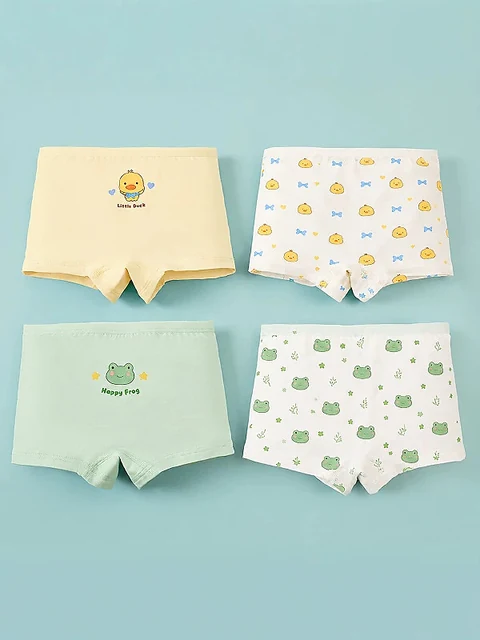
Existing duck and frog girls’ set shown as a print reference. Any requested changes to prints, branding or packaging need confirmation.
A filename can stop an artwork mix-up
Name the artwork before attaching it. “print-A-v1” is an example; any filename that you can identify later would serve the same purpose. Add a note or drawing showing its position on the garment. Then ask which file format and production method are suitable. The rights to use the artwork are yours to check.
Include proposed label text and packing artwork. The current catalogue lists 95% cotton, 5% elastane; another blend needs assessment. If you need testing or destination documents, name them in the enquiry. A product photograph cannot establish a certification.
What exactly does the quote cover?
Keep the artwork filename, quantity sheet and packing version next to the quotation. Check sample arrangements and charges, payment, freight and timing with that same brief. An unanswered field should stay open until a term is agreed.
If print-A-v2 replaces v1, ask whether the quoted amount and any previous approval still apply. Retain the agreed specification for bulk ordering. An example filename helps track the discussion; it cannot tell you whether the design can be manufactured.
When do you need the goods to arrive?
Send the destination country, postal code and date you need the goods. Ask about production or dispatch first, then transport. You may have seen our stock reference of dispatch in as little as 3 days, subject to availability and order confirmation. For this custom enquiry, ask for its own schedule; the stock figure is about dispatch, not the date your goods arrive.
Which requirements are agreed, and which still need an answer?
At 100 individual pieces, a custom enquiry reaches the starting minimum. It still needs a discussion about the shape, prints, sizes, branding, samples and final specification. Keep the quote for that brief beside your files. The stock price and stock dispatch reference cannot fill in those answers for a custom order.