
Buying guides
Kids’ underwear sample approval: keep the version, measurements and open points together
A sample can look right while the order is still unclear. Before approving custom kids’ underwear, put the sample identifier, measurement record and artwork version beside the proposed garment quantities. Mark any unanswered point as open. For a LULUNIO custom enquiry, the starting quantity is 100 garments. What goes into that quantity—sizes, prints and styles—is a discussion to have with the quotation.
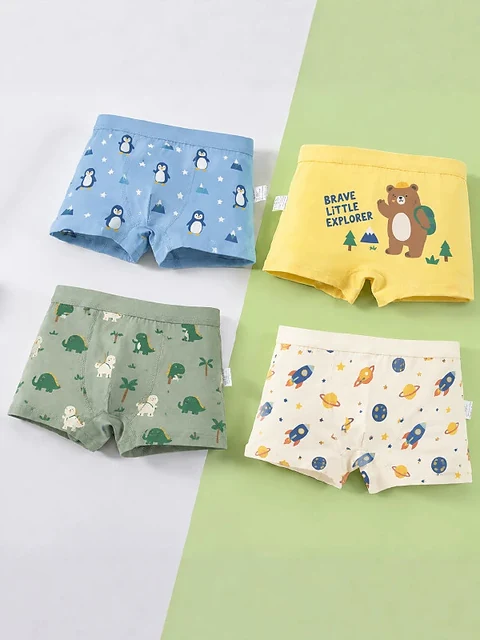
Existing penguin-print boys’ set used to illustrate how a catalogue reference can identify a style. It is not a sample made for a customer’s custom order.
Which sample does “approved” refer to?
Consider this example: a buyer has one sample beside an email saying “use the new print.” Suppose another print file arrives the following week, along with a change to the waistband. Which combination did the buyer approve? There is no way to recover that decision just by looking at the first photograph.
In this example, S1 is the sample, print-v2 is the artwork file, and the measurements are on a sheet dated 13 October. These are names invented for the explanation; LULUNIO has not assigned them to an order. They let the buyer write “S1 with print-v2” instead of “the latest one.” A later v3 file would need a response of its own. Has only the print changed, or is the waistband change included too?
Reading the waist measurement on the sheet
A buyer starting from a catalogue style will find its size references and the stated blend, 95% cotton, 5% elastane. That information helps describe the starting style. There is still a measurement to take on the physical sample.
Say the buyer writes “waist: 24 cm.” Was that across a flat garment resting on a table? Was the elastic pulled? Where did the tape start and end? A second person can follow the first reading only if those details are on the sheet. We have chosen 24 cm for this explanation, not because it is a LULUNIO target. There is no pass-or-fail limit here either. That would come from the target and allowable variation the two parties agree to use.
Fit questions belong on the same record. A note such as “leg opening needs review” explains why approval is pending. A size letter with a tick beside it does not.
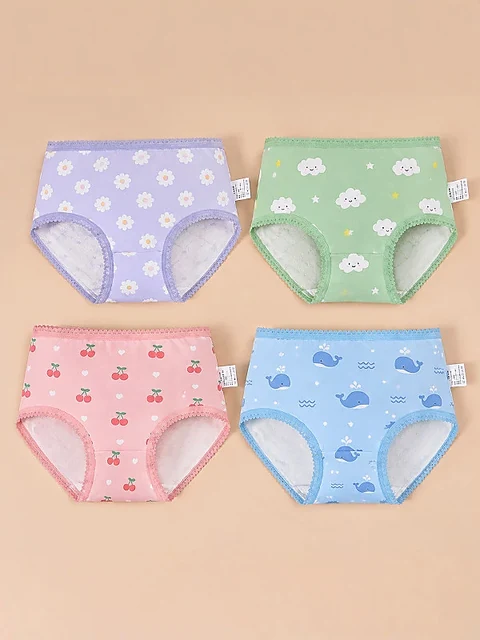
Existing playful-print girls’ briefs used as a catalogue reference. A new sample, print, label or packing proposal needs its own approval record.
Check the label against the garment and the packing brief
Put the fabric requirement, proposed label text and artwork version together. If the buyer wants a different blend, the catalogue wording would describe the starting product, not the requested change. That change needs an answer from the supplier. Any market-specific testing or document requirement should remain a separate question until the applicable evidence and responsibility are agreed.
Packing has its own count. In ready stock, a listed set has 4 garments. A buyer might also propose four garments per pack for a custom order, but that proposal leaves quite a bit unwritten. Four of the same size? Four different prints? Until the packing brief answers those questions and the supplier accepts it, “four per pack” is only a count.
Working out the packs before asking for a quote
Suppose the buyer’s sheet has two lines: one size, 40 garments; another size, 60 garments. Adding those lines gives 100 individual pieces. With four garments going into each pack, the calculation is 100 ÷ 4 = 25 packs. Now try assigning the prints: neither calculation says which four garments share a pack. It also says nothing about whether the factory can make that split. This is a planning exercise, not an accepted LULUNIO order.
Send the breakdown as a proposal. With a 100-piece starting minimum, the total is only the first number to check. The quotation still needs a confirmed allocation by style, print and size. If that allocation changes, there may be a different quotation or sample discussion; the old total alone cannot settle it.
Write the decision beside the version
“Approved” is a useful word once its scope is clear. In the S1 example, a buyer could approve the print but still be waiting for a leg-opening revision. Calling the whole sample approved would hide the unfinished work. The response can instead identify S1 and print-v2, say which points have been accepted, and name the revision still due. Keep that response with the photos so the next person can see the same decision.
Sample fees, delivery arrangements, production timing and payment are still order-specific matters. Those discussions continue even when the sample itself has been accepted. A request for the next quotation can carry the record forward: which version is being priced, which revision is still due, and who is due to answer it?
Send the approval record with your custom enquiry
When enquiring about a custom order, attach the product link and the sample record together. In the example above, S1 identifies what was measured; print-v2 identifies the artwork under discussion. The two quantity lines tell the supplier how the proposed 100 garments are divided. The packing notes would then show where those garments go. There is still a leg-opening revision outstanding in this example, so the enquiry needs to mention it. That is something to resolve in the sample discussion, along with the sample costs and the schedule for this particular request.