
Buying guides
Wholesale kids’ underwear: first-order receiving checklist
Before putting a wholesale kids’ underwear delivery into stock, reconcile three things separately: complete sets, the prints within each set and the agreed size quantities. A correct garment total can still hide the wrong assortment. Use the confirmed order, not a photograph remembered from the enquiry, as your receiving reference.
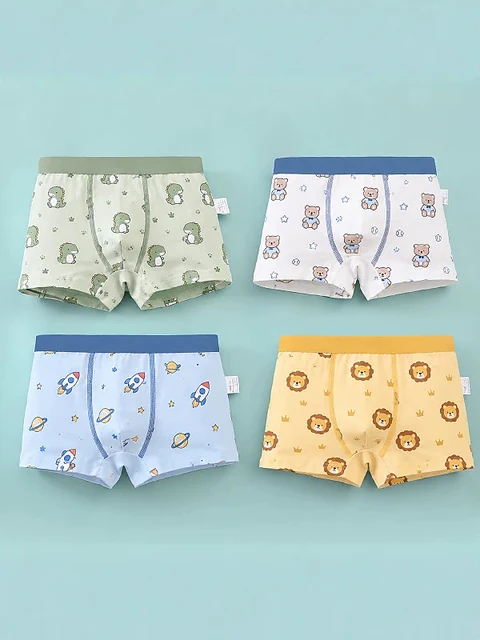
Existing boys’ four-piece assortment reference: dinosaur, bear, lion and rocket. The linked product page identifies this particular set.
Keep the delivery and the order connected
What arrived, and which order does it belong to? Put the receipt date, checker’s name and shipment reference on the receiving sheet. A photo taken before opening will preserve the condition of the outer packing, including any visible damage. Keep the order confirmation and the shipment’s packing information with that sheet. For quantities, “set” means 4 garments in this catalogue. A carton is a different unit. Its contents, and any retail packing, belong to the shipment’s agreed packing record.
Count complete sets before adding individual pieces
For the receiving sheet, list the product and height on each line. For example, 6 sets at 110 cm plus 6 sets at 120 cm equal 12 sets, or 48 garments. If one set contains only three garments, record eleven complete sets and one incomplete set: 47 garments total. This is a counting example, not an actual order or stock allocation.
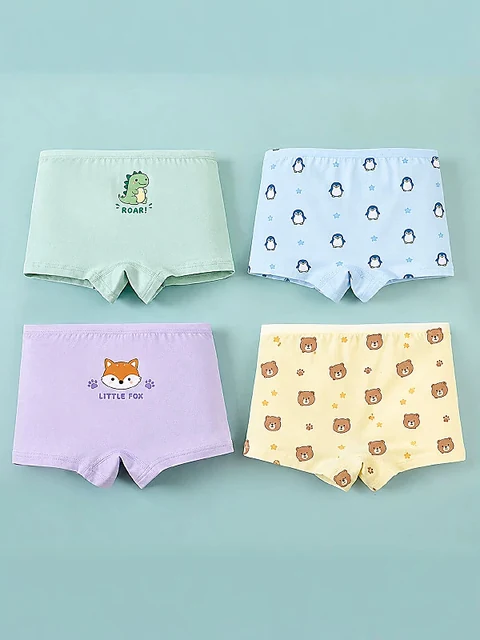
Existing girls’ Animal Friends four-piece set. Keep its order and receiving record separate from the boys’ example.
A total of 48 does not settle the print check
The Printed Boxer Brief Set shows dinosaur, bear, lion and rocket prints. Its five gallery photographs are one group view and four individual views. Match the contents against the particular product link and agreed assortment. Four dinosaurs would still total four garments, but would not match that published set. Keep other styles on separate receiving lines even when their colours look similar.
Read each size label, then compare like measurements
An outer sticker cannot verify the size count. Read the garment labels and compare them with the agreed order. The listed height is a reference for the child, not a measurement of the underwear. If a garment measurement differs, ask how it was taken and what tolerance was agreed; request clarification when either detail is missing.
Write a difference that someone can locate
Record the product link, listed height, packing reference, expected quantity, received quantity and clear photographs together. Note visible marks or opened seams on the affected item, then compare them with the agreed specification. Contact LULUNIO with the order reference to discuss the discrepancy.
Turn the receiving sheet into a useful reorder reference
Keep the confirmed assortment, resolved differences and size counts together for the next purchase. A receiving result is not evidence of which sizes sell best; add your own sales and fit feedback before changing the mix. For OEM/ODM, check against the approved custom specification rather than the catalogue print combination. Before placing another order, confirm current availability, packing and dispatch timing again.
Prepare the next order from the checked lines
For the reorder enquiry, product links and ready-stock quantities in sets give LULUNIO a starting point. Still discussing a short count or another receiving difference? Keep that question under the original order reference, with the relevant photos, so it does not get lost among the new quantities. The order planner can help with the product budget. Carton packing, delivery charges and a remedy for any discrepancy need their own confirmation.