
Buying guides
Kids' Underwear Bulk Order Quality Checklist Before Shipment
Quick answer: Before a bulk kids' underwear shipment is released, compare the finished goods with the approved order, not with a generic catalog picture. Inspect size identification, construction, waist elastic, print appearance, four-piece pack contents and carton counts. Record who inspected, what they checked and how exceptions will be handled before the shipment decision.
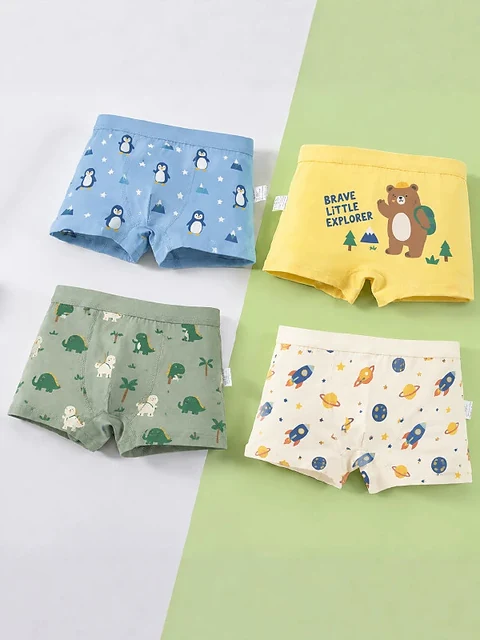
Existing LULUNIO boys’ four-piece set shown as a catalog reference, not a confirmed order or inspection result.
Separate sample approval from shipment inspection
An approved sample answers, “Is this the product we want to produce?” A pre-shipment check asks a different question: “Does the finished quantity match the approved product and packing instructions?” The earlier sample is a reference, not evidence that every finished unit is acceptable.
The order record should identify the exact style and version, fabric specification, size measurements, approved print or artwork, waistband and seam details, labels, quantity allocation and packing method. If the parties changed one element after approval, add the revised approval instead of relying on memory or a chat photo.
Eight practical checkpoints for buyers
1. Style and size identification. Confirm the carton, set pack and garment labels refer to the correct styles and sizes. Check finished measurements against the agreed size chart and its tolerances. Do not treat 100–140 cm height references as a substitute for measured garment dimensions.
2. Fabric and hand feel. Compare the approved construction and material description with the finished items. Look for obvious uneven fabric, discoloration, unwanted marks or inconsistent stretch. A visual check does not prove fiber content or chemical compliance; request appropriate documented testing where needed.
3. Waistband and elastic. Look for twists, exposed rough edges, detached elastic, unequal waist openings or inconsistent recovery after gentle stretching. The inspection method and acceptable measurement limits should be agreed in advance, rather than invented after production.
4. Seams and leg openings. Check for broken or skipped stitches, loose thread ends, uneven leg edges and uncomfortable protrusions. Inspect the inside as well as the outside; a product that photographs well may still have poor interior stitching.
5. Prints and color matching. Confirm every print belongs to the approved product version. Check registration, noticeable shade differences, ink marks and whether colors or prints are mixed in the correct set. Approved reference images should be linked to a specific item, not reused as a generic promise for all styles.
6. Four-piece set contents. Count the actual garments inside selected selling sets. One set means four individual items for LULUNIO's current catalog products. Confirm the correct size and intended print combination; a carton containing the right total number of garments may still contain incorrectly assembled sets.
7. Retail packing and outer cartons. Verify labels, barcodes if specified, packing presentation, carton quantity and shipping marks against the purchase order. Confirm that the package protects the goods in the agreed transport method. Custom labels and special packing must be included in the approved instruction before inspection.
8. Documentation and exceptions. Record the sample or specification version, date, inspected lot, sample selection method, defect descriptions, photos, quantity affected and corrective action. If a required market test or certificate was agreed, match the document to the product, style and applicable order rather than assuming a generic certificate covers everything.
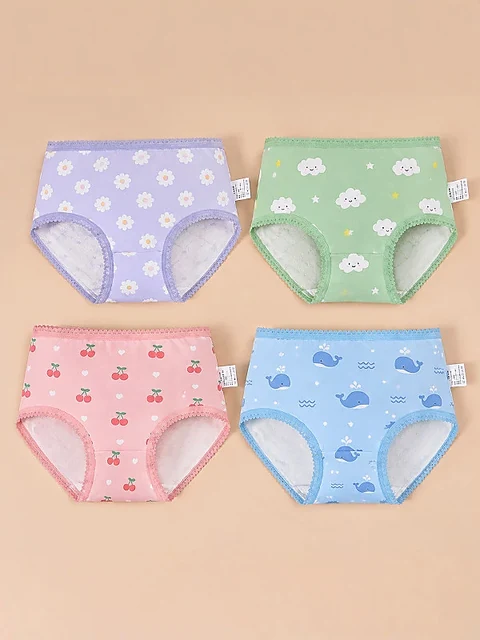
Existing LULUNIO girls’ four-piece brief set. Confirm its prints, size allocation and packing for your order.
Agree how to sample and decide before inspection day
A buyer does not need to inspect every garment to request a useful report, but the number selected and the pass/fail criteria must be written down beforehand. The appropriate sampling plan depends on the purchase contract, lot size, defect severity and buyer's risk tolerance. If the parties use an AQL-based standard, agree the standard and levels; do not assume a numeric AQL from an unrelated supplier applies here.
Define which faults are critical, major or minor for this order. A loose cosmetic thread and a dangerous sharp object should not be treated as equivalent. If an inspection reveals a problem, the response might be sorting, repair, replacement, another inspection or holding shipment. The action and costs must be agreed with the seller; this article does not state that every order includes third-party inspection services.
An example that exposes packing errors
Imagine a hypothetical shipment of 60 four-piece sets: 240 individual garments. The purchase order calls for 20 sets each of three approved sizes. If the warehouse counts 240 garments but finds 25 sets in one size and only 15 in another, the piece total is correct while the order is not. If one selling set holds two repeated prints instead of the approved combination, it needs attention even when its four-item count is correct.
This is a counting illustration, not a real LULUNIO order or inspection result. It shows why buyers should reconcile set count, per-size allocation and set contents separately.
Keep one simple release record
A concise inspection and shipping release sheet can include: purchase order and product versions; inspected quantities by SKU and size; approved reference files; the inspection method; exceptions with photographs; agreed corrections; final carton counts; who approved the release; and the carrier handover date once confirmed. A “passed” message with no identified lot or supporting record is difficult to audit later.
If your project is still at the development stage, first review LULUNIO's sample-approval checklist. For current stock, clarify which inspection documents are available for the order. For OEM/ODM, put inspection expectations in the purchase brief before production, not only before dispatch.
Discuss your order with LULUNIO
LULUNIO supplies boys' and girls' underwear in four-piece catalog sets and accepts separate OEM/ODM enquiries. Visit the private-label process and buyer FAQ, or email sales@lulunio.com with your product reference, size breakdown, destination and required quality documents. Product-specific testing, inspection arrangements, pricing and dispatch timing require written confirmation.