
Buying guides
How to Find a Kids’ Underwear Manufacturer in China: Build a Useful Shortlist
To find a suitable kids’ underwear manufacturer in China, start with a short buying brief, search for the product and cooperation model together, then check each candidate against the same evidence list. A useful shortlist explains why a supplier fits your order and which claims still need checking. A high search position alone does not establish manufacturing capability.
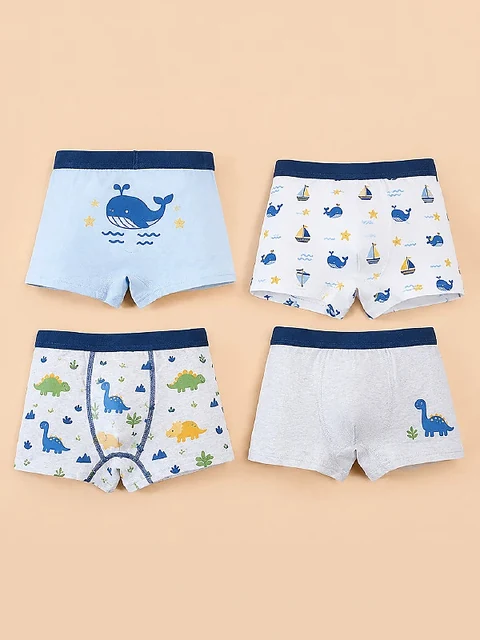
LULUNIO’s whale and dinosaur boys’ boxer brief set is an existing catalogue example. Use its product link to identify the style in a supplier enquiry; the photograph is not an audit or compliance report.
Write the brief before collecting factory names
A new retailer asks for a Chinese underwear factory and receives a list of suppliers. One offers a ready-made assortment, another quotes a new print, and a third proposes a different fabric. The replies may all be reasonable, but they do not answer the same order. Put the buying decision into a few lines before searching.
State the destination market, sales channel, boys’ or girls’ cut, required material, height range and approximate first quantity. Add whether you want existing goods, changes to an existing style or production from your own design. If your launch date is fixed, say when the goods must arrive, not just when you intend to place the order. Unknown details can stay open, provided they are identified as open.
Use search routes to discover candidates, then verify them
Search the product and the buying model together: for example, boys boxer briefs manufacturer China private label, or girls briefs wholesale China ready stock. A broad search for children’s clothing may bring back companies whose main work is not underwear. The search phrase narrows the investigation; it does not prove that the results are reliable or suitable.
Supplier websites, trade-show exhibitor lists, sourcing directories and referrals can each produce leads. Record where you found the company and the date. When a directory page and a company website appear to describe the same business, compare their contact details, product references and company identity. Treat conflicting information as a question to resolve before paying for samples.
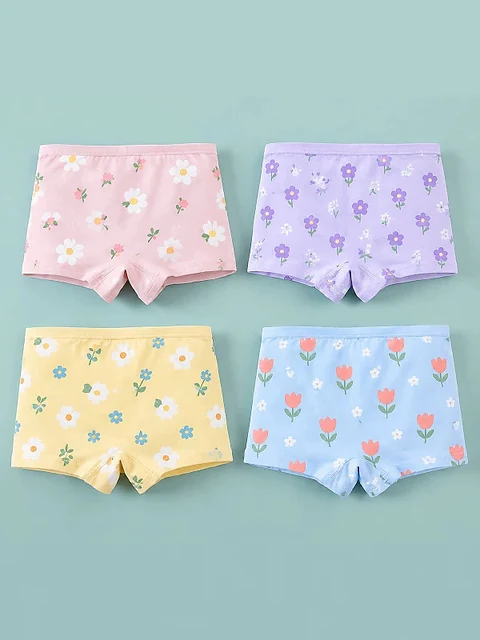
The floral girls’ boxer brief set illustrates a different product requirement. Ask for information about the selected style rather than assuming every catalogue item has identical specifications.
Give every candidate the same first enquiry
| Buying decision | Information to send | Reply to request |
|---|---|---|
| Product | Cut, fabric and one reference link | The exact matching style or a stated alternative |
| Order | Pieces or sets, first quantity and size split | Minimum and its scope in writing |
| Market | Destination and sales channel | Documents available for the proposed goods |
| Timing | Required arrival date and open decisions | Separate sample, production and transport assumptions |
Sending the same brief makes gaps visible. A supplier that answers only with a catalogue has not yet confirmed your order. Ask a short follow-up about the missing decision instead of starting a new conversation with another set of assumptions. Keep the original brief and any revised version so you can tell which quotation answers which request.
Separate business identity from product evidence
Check who would issue the quotation, invoice and order confirmation. Ask which party makes the goods and which party is responsible for the commercial agreement. A factory video may help explain a production process, but it does not by itself connect that workshop to your order. Ask how the proposed style, sample and production location are linked.
Market experience also needs a defined scope. A statement about exporting to Europe is different from evidence that a particular style meets your retailer’s requirements. Request relevant, shareable evidence without asking the supplier to disclose another customer’s confidential order. Certificate checks should identify the holder, validity and product coverage, rather than rely on a logo in a brochure.
Place LULUNIO on the shortlist only where the brief fits
LULUNIO’s current catalogue includes boys’ boxer briefs, girls’ boxer briefs and girls’ briefs. The listed material is 95% cotton and 5% elastane, with height references from 100 to 140 cm. These are useful starting facts for comparing your brief with the catalogue, not a promise of every fabric or age range.
The current ready-stock minimum is one four-piece set; custom orders start at 100 individual underwear pieces. Prices and final conditions are quoted for the order. A request for organic cotton, bamboo-based material, a different size range or a named certification needs separate written confirmation. Browse the boys’ boxer brief range and girls’ briefs range to choose reference styles before requesting samples.
Keep a shortlist with decisions, not just names
| Status | Meaning | Next action |
|---|---|---|
| Potential fit | Catalogue appears relevant; important facts remain open | Send the common buying brief |
| Ready for sample discussion | Product, quantity basis and responsible party are clear | Confirm sample identity, cost and evaluation scope |
| On hold | Required material, documents or timing are unconfirmed | Resolve the specific gap before committing |
A small, well-documented shortlist is easier to use than a long ranking copied from search results. Avoid a numerical score that hides a critical gap: an attractive price cannot compensate for the wrong product or an unidentified contracting party. Move a candidate forward because the evidence answers your requirements, not because several ordinary boxes are ticked.
Before comparing samples, use the supplier evaluation guide for the next stage. Keep the decision open where evidence is incomplete. Your first enquiry to LULUNIO can include a product link, destination, first quantity, requested material and required arrival date. That gives the discussion a concrete order to assess.
Supplier discovery questions
Can a search result prove that a supplier owns a factory?
No. Use the result to find a candidate, then verify the company identity, production responsibility and connection between the proposed goods and workshop.
What should a new brand send in its first message?
Send the destination, sales channel, product type, material, height range, approximate quantity and required arrival date. State whether you need stock goods, existing-style changes or a new design.
Does LULUNIO’s current catalogue include 100% cotton underwear?
The confirmed catalogue material is 95% cotton and 5% elastane. A 100% cotton requirement needs a separate feasibility discussion and written confirmation.
Should I request samples from every company I find?
First confirm the style, order basis and responsible party. Request samples from candidates that fit the brief, with a clear description of what each sample is intended to verify.