
Buying guides
Your First Kids’ Underwear Supplier Enquiry: Twelve Inputs Before a Technical Pack
A first supplier enquiry can be useful before a full technical pack exists. Identify your business, destination, product reference, buying route, quantity and deadline, then mark the remaining decisions as open. Ask the supplier to respond against those fields. The purpose is to establish what can be discussed and what information is missing, rather than obtain a final price from an incomplete brief.
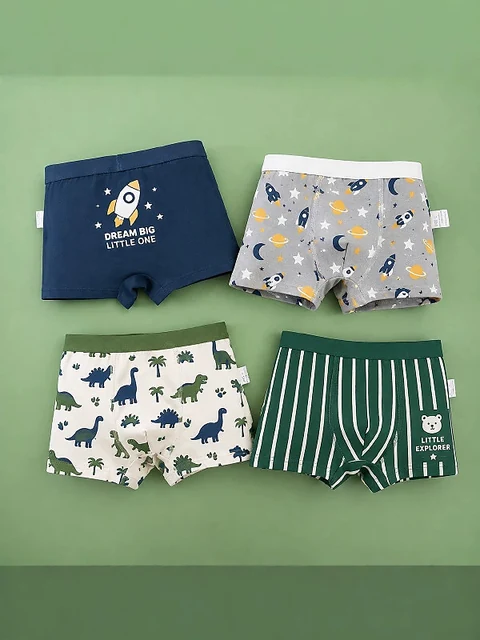
The Space & Stripe boys’ product is an existing four-piece assortment. A direct catalogue link identifies the reference more clearly than a generic request for underwear.
Give the supplier enough context to choose the next question
| Input | What to send | If undecided |
|---|---|---|
| 1. Business and contact | Your organisation, role and a reply address | Explain whether you are researching or preparing an order |
| 2. Destination market | Country where the goods will be offered | Name the markets being considered |
| 3. Sales channel | Shop, wholesale distribution or your own brand | Describe the intended buyer |
| 4. Product reference | A catalogue link and the required underwear cut | Ask to compare named existing styles |
| 5. Buying route | Existing goods, possible changes or a new design | Request a comparison of the relevant routes |
| 6. Material requirement | The composition you require or a sample reference | Ask what is documented for the chosen item |
| 7. Size requirement | Child-height range and any garment measurements available | Ask for the selected style’s size information |
| 8. Quantity and unit | Number of individual pieces or four-piece sets | Give an estimate and identify the unit |
| 9. Assortment | Known quantities by style and size | Ask which allocations need confirmation |
| 10. Branding and packing | Changes you want assessed | List options without assuming they are available |
| 11. Sample question | What you need to check before ordering | Ask about availability, charges and the process |
| 12. Timing and destination | Required arrival date and delivery location | State the target window and ask which dates can be confirmed |
A message saying “send your best price for children’s underwear” leaves several different orders possible. A wholesaler comparing existing sets needs a different answer from a new brand proposing its own print. Explain which decision you are trying to make first.
You do not need to invent specifications to fill a form. If you have not selected a fabric, label format or size allocation, write that explicitly. Distinguish an essential requirement from an option you want the supplier to explain.
Use a short illustrative message, then attach the open points
The following is a writing example, not a customer order or a confirmed quotation: “We are evaluating a first assortment for a children’s clothing shop. Our destination country is [country]. We are interested in the linked boys’ and girls’ styles as existing four-piece sets. Our initial estimate is [number] sets. Please explain the available size information and which style-size allocations you can confirm.”
Continue with the unresolved decisions: “We have not agreed a branding change or packing format. Please tell us what information you need to assess those options separately. We would like to review samples before an order; please confirm the proposed sample process and costs. Our target arrival window is [dates].” Remove every bracket before sending.
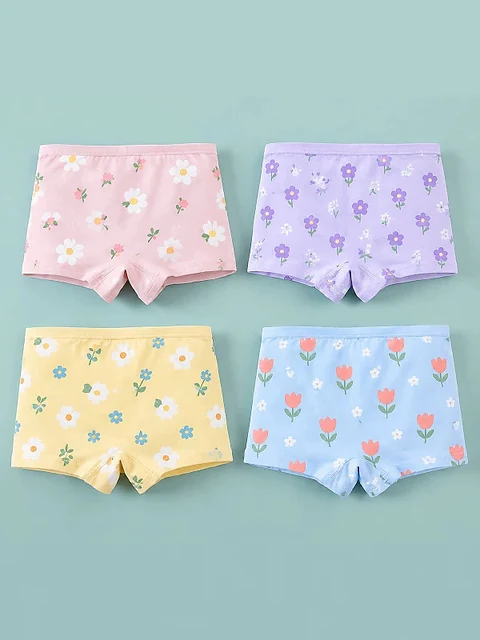
The floral girls’ product illustrates a separate enquiry line. Keep its style identity and size questions distinct when writing a combined purchasing brief.
Branch the follow-up instead of asking everything at once
For a ready-stock discussion, ask the supplier to identify the offered assortment, confirm availability and explain the quotation unit. For a custom discussion, ask which specifications and approvals are required before a meaningful offer can be prepared. Do not treat a general minimum as written acceptance of every combination of styles and sizes.
LULUNIO’s current ready-stock starting quantity is one four-piece set. Custom enquiries start from 100 individual underwear pieces. Prices are quoted for the order. Those are enquiry starting points; the selected styles, allocation and final conditions still require confirmation.
Ask for a reply you can compare
| Reply field | Example of a useful response |
|---|---|
| Confirmed | Exact catalogue reference and quotation unit |
| Still open | Size allocation needs the buyer’s breakdown |
| Next step | Confirm which samples are available and the applicable charges |
Request a response that lists confirmed points, questions still needing your input and the next practical step. Keep that response with the product links and the date of the enquiry. If a later reply changes the buying unit or product reference, correct the brief before comparing offers.
Once you have chosen the custom route, the detailed custom-order checklist becomes useful. At first contact, a concise brief with honest gaps is more actionable than an elaborate document whose requirements have not been decided.
Questions before the first supplier message
Can I enquire without finished artwork?
Yes. Describe the product direction and identify artwork as an open decision. Ask which files will be needed for the next stage; do not assume a production quotation is final.
Should I state a quantity if it is only an estimate?
Label it as an estimate and state the unit. An approximate number of sets communicates something different from the same number of individual underwear pieces.
Does the general custom minimum permit any mixed order?
No combination is established by the minimum alone. Request written confirmation of the styles, sizes, colours and allocations relevant to the proposed order.
What should the supplier’s first reply contain?
A reference to the products discussed, the confirmed information, questions that remain and a proposed next step. Sampling conditions and quotation scope should be explicit when relevant.